


How Archaeological Findings Give An Insight Into The True Value of Money
- 21 August 2023
- Posted by: Coffey Brooks
- Categories: Financial Advice, Financial News
Money has played a crucial role in shaping societies throughout history, and from its primitive origins to modern financial systems, the concept of money has evolved significantly throughout the ages.
However, while we often associate money with purchasing power, archaeological finds offer a captivating perspective into the history of money and the value it has held over time.
By studying ancient coins, trade routes, and economic systems, archaeologists continue to provide valuable insights into the true value of money beyond its material worth.
Ancient Coins Are More Than Just Money
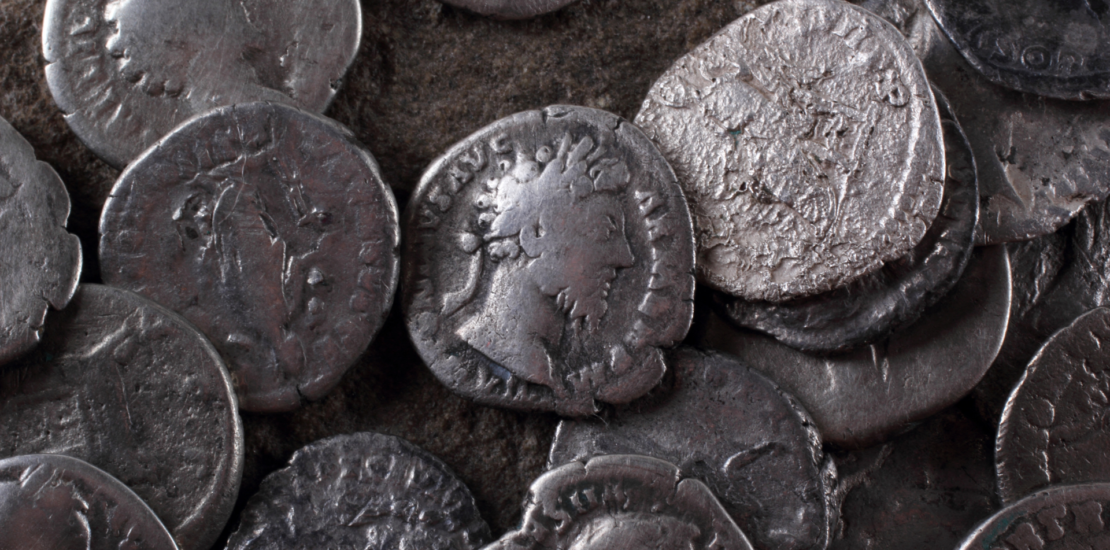
Coins act as tangible artefacts that reveal a wealth of information about the civilisations that produced them. They can offer insights into not only economic systems and political ideologies but even cultural exchanges too. The design, material, and distribution of coins can also uncover the priorities and values held by ancient societies.
For example, Roman denarii symbolised both the wealth of the empire and the authority of its emperors. Inscriptions on coins also conveyed messages of propaganda or political legitimacy.
By archaeologists analysing coinage fluctuations, they can develop a greater understanding of economic trends, inflation, and political stability, providing a holistic understanding of ancient societies.
Trade Routes and Economic Networks
Archaeological discoveries of ancient trade routes highlight the interconnectedness of economies and the diverse range of goods exchanged between different cultures and countries.
The Silk Road serves as a prime example as this complex network connected East Asia to the Mediterranean, allowing for the exchange of pottery, textiles, and precious metals.
By analysing findings, archaeologists are able to identify patterns of commerce, assess the value placed on specific goods, and begin to uncover the economic impact on various regions.
Additionally, the exchange of currencies along these routes also reveals the intricate nature of money.
For example, currency conversion and the existence of multiple coinage systems has been found and illustrates how societies dealt with the challenges of cross-cultural trade and how they valued different forms of money throughout different periods of time.
Economic Systems and Social Hierarchies
Archaeological excavations provide insights into ancient economic systems and their influence on social hierarchies, and places such as ancient marketplaces and city ruins can offer valuable clues about economic organisation, labour practices, and wealth distribution.
For instance, the ruins of ancient Roman cities like Pompeii unveil a thriving market economy with shops, workshops, and trade activities. The layout of these cities also indicates the concentration of wealth and the social roles associated with different economic avenues.
Archaeological finds also shed light on the role of money in the lives of ordinary people and by studying small-scale transactions and the availability of various currencies, researchers can uncover economic disparities within ancient societies. This understanding then helps to provide insights into social mobility, class structures, and the impact of economic inequality within different civilisations too.
How Does This Relate To The Present Day?
Examining the true value of money through archaeological finds holds relevance for our modern society, and by understanding the historical development of money, it allows us to appreciate its broader social, cultural, and economic significance beyond its face value.
This knowledge can then be used to guide us in building more equitable economic systems, enhancing our financial literacy, and recognising the impact that money has on social structures.
Insights from ancient trade and economic networks can also widen our understanding of globalisation and emphasise how connected today’s economies are. By acknowledging the diverse currencies and systems that existed in the past, we can better appreciate and respect the diverse financial landscapes of the present.
Final Thoughts
Archaeological finds have the power to unlock the true value of money, providing a window into the past that shows the complexity of currency beyond its material worth and remind us that money is not just a form of exchange, but also a reflection of values, ideologies, and societal relationships.
Coffey Brooks are a team of Independent Financial and Mortgage Advisers based in Clacton-On-Sea, Essex and are directly authorised and regulated by the Financial Conduct Authority.
[*] Disclaimer: This article has been written to the best of our knowledge to the time and date of posting. Coffey Brooks Financial Services Ltd shall not be held responsible for any actions taken based on the information provided in this article.